
AI for Exam Preparation: A Smarter, Safer Study Guide for Students
A difficult concept used to mean waiting for class, searching through textbooks or hoping a friend could explain it. Now, students can ask an AI chatbot for help in seconds. That convenience can make exam preparation more accessible—but a confident-sounding answer is not automatically a correct one.
Used thoughtfully, AI can explain concepts, turn notes into revision questions and help students practise. Used carelessly, it can introduce errors, encourage passive learning or expose personal information. The best approach is to treat AI as a study assistant—not a teacher, textbook or exam authority.
Where AI can make studying easier
Get a concept explained another way
If a textbook explanation is not clicking, ask AI to rephrase it at your level, use an analogy or walk through a simple example. You can also request an explanation in a language or format that works better for you. For maths and science, ask it to show each step, then check the method against your class materials. A clear explanation is a starting point, not proof that the answer is correct.
Turn trusted notes into active revision
Paste in your own notes or material you are permitted to use and ask for flashcards, short-answer questions or a quiz. This can make revision more active than rereading. Give the tool a clear scope—for example, “Create ten questions using only the notes below, and put the answers after the questions.” Review the output for missing details and inaccuracies before relying on it.
Practise weak areas—and explain what you know
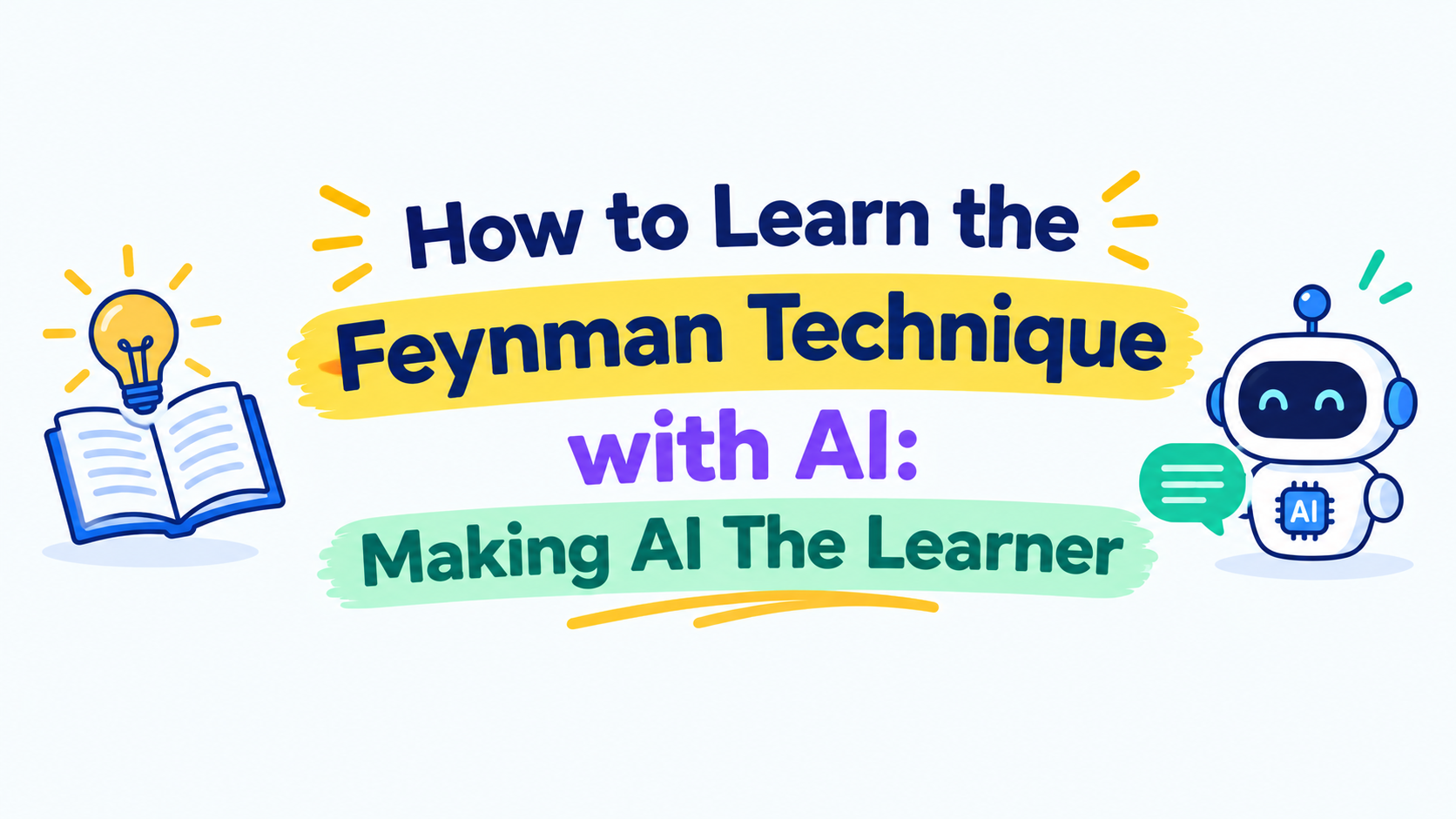
AI can generate extra practice questions on a topic you find difficult. Treat them as supplementary exercises: they may not match your exam’s difficulty, wording or marking scheme. Another useful technique is to explain a concept back to the chatbot as if you were teaching it. Ask it to identify gaps or ask follow-up questions, then verify its feedback. This resembles the Feynman Technique, in which explaining an idea helps reveal what you do and do not understand.
Build a realistic study plan
Share your available study hours, subjects, deadlines and planned breaks—without sharing identifying personal details—and ask for a schedule. Treat the result as a draft. Adjust it to your energy, existing commitments and the time each subject actually needs. A workable plan with breaks is more useful than an ambitious timetable that quickly falls apart.
Use AI actively, not as an answer machine
A simple routine can help keep learning at the centre:
- Try first: Attempt the problem or recall the topic before asking for help.
- Ask specifically: Request a hint, a step-by-step explanation or a simpler example—not just the final answer.
- Check the response: Compare it with your textbook, class notes, teacher or another trusted source.
- Practise independently: Close the chatbot and solve a similar question without assistance.
- Track what remains unclear: Bring unresolved questions to a teacher or study group.
For example, instead of asking, “Solve this problem,” try: “Give me one hint at a time. Wait for my attempt before showing the next step, and point out where my reasoning goes wrong.” This keeps you engaged in the thinking rather than simply copying a solution.
Know what AI cannot reliably do
AI systems can make mistakes, including in multi-step calculations, scientific derivations, dates and factual details. They may also omit important syllabus points or present an uncertain answer with confidence. Check high-stakes information carefully, and do not use AI-generated practice questions as a substitute for official sample papers or past exams.
Exam dates, eligibility criteria, syllabuses and application deadlines can change. Confirm them through the official exam authority or school. For Indian national exams, students can check notices from the National Testing Agency where relevant; other exams may be administered by different bodies.
AI also cannot replace the conditions and feedback offered by a timed mock test, a structured course or a teacher who knows your progress. Mock tests help you practise pacing and identify weak areas under exam-like conditions. Coaching can offer routine and guidance. AI can supplement these resources, but it cannot guarantee preparation or results.
Protect your privacy and follow school rules
Do not enter passwords, phone numbers, application or identification numbers, financial details, or other sensitive personal information into a chatbot. Check the tool’s privacy settings and your school’s rules before uploading notes, assignments or other material. If an assignment requires independent work, follow its AI-use policy and be transparent about assistance where required.
A helpful assistant, with you in control
AI is most useful for exam preparation when it helps students ask better questions, test their understanding and make revision more manageable. It is least useful when students accept every response without checking it or let the tool do all the thinking. Use AI to get unstuck, then return to trusted materials, independent practice and human guidance. The goal is not to study with a chatbot forever—it is to become more confident studying without one.


Comments
Be the first to comment.